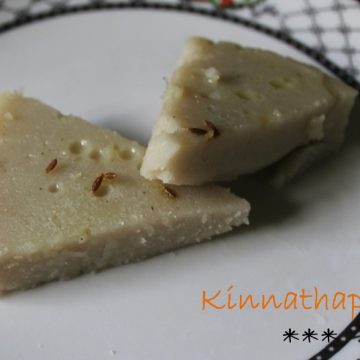
Kinnathappam Recipe
Kinnathappam Recipe, is a traditional South Indian dessert prepared by Muslim community during Ramadan season. It is nutritional and tasty dish that can be easily prepared at home using rice, eggs, coconut milk and sugar. The dessert is filling and tasty and enjoyed throughout Ramadan season and it takes part in Iftar menu. Learn how to make kinnathappam with step by step pictures.
Equipment
Round Steamer Container
Blender
Sieve
Ingredients
- ½ cup Basmati Rice
- 2 cups Thick Coconut Milk I used less than 2 cup
- ½ cup Sugar
- 1 large Egg
- 1 teaspoon Ground Cardamom
- ½ teaspoon Cumin Seeds
- 1 teaspoon Oil
Instructions
- Wash and Soak basmati rice for 3 hours. Now strain them and add it to the blender. Pour in coconut milk slowly and grind them to a smooth batter. Pour the batter into a bowl.
- In the same blender add egg, sugar and cardamom powder. Blend them so they are combined. Pour this into the batter bowl. You can adjust the consistency of the batter by adding more coconut milk. If you take the back of the mixing ladle and draw a line using your fingers, the line should stay there. But the batter on both sides of the line should not be too thick.
- Grease a steel bowl with oil. Pour the batter inside the bowl. Sprinkle the top with some cumin seeds. Place this over a pot of boiling water. Cover and cook for 20 to 25 mins. You can press the top of pudding with your fingers to see whether it is cooked.
- Remove them from steamer, allow to cool down completely and cut into wedges. Serve.
Notes
- You can use basmati rice or kaima rice for this kinnathappam.
- Cumin seeds can be skipped in this recipe.
- You can use extra sugar if you prefer this to be on the sweeter side.
- Steam the pudding until it is cooked. It might get extra time sometime.
- You can cut this into squares.
Serving & Storage
Leftover Cooked kinnathappam can be stored in fridge and reheated when serving. Kinnathappam can be stored upto 4 days in fridge.Nutrition
Nutrition Facts
Kinnathappam Recipe
Serving Size
1 servings
Amount per Serving
Calories
432
% Daily Value*
Fat
27
g
42
%
Saturated Fat
22
g
138
%
Trans Fat
0.01
g
Polyunsaturated Fat
1
g
Monounsaturated Fat
2
g
Cholesterol
47
mg
16
%
Sodium
34
mg
1
%
Potassium
303
mg
9
%
Carbohydrates
47
g
16
%
Fiber
0.5
g
2
%
Sugar
25
g
28
%
Protein
6
g
12
%
Vitamin A
71
IU
1
%
Vitamin C
1
mg
1
%
Calcium
38
mg
4
%
Iron
4
mg
22
%
* Percent Daily Values are based on a 2000 calorie diet.