

Biang Biang Noodles also known as Biángbiáng Miàn or 𰻝𰻝面 in Chinese is one of the most famous traditional noodle dish from Shaanxi Province in northwestern China, especially in Xi'an. The noodles are long, wide which resembles belt, hence it is also known as Belt noodles. Making hand pulled biang biang noodles at home is easy and fun, learn how to make belt noodles with step by step pictures.
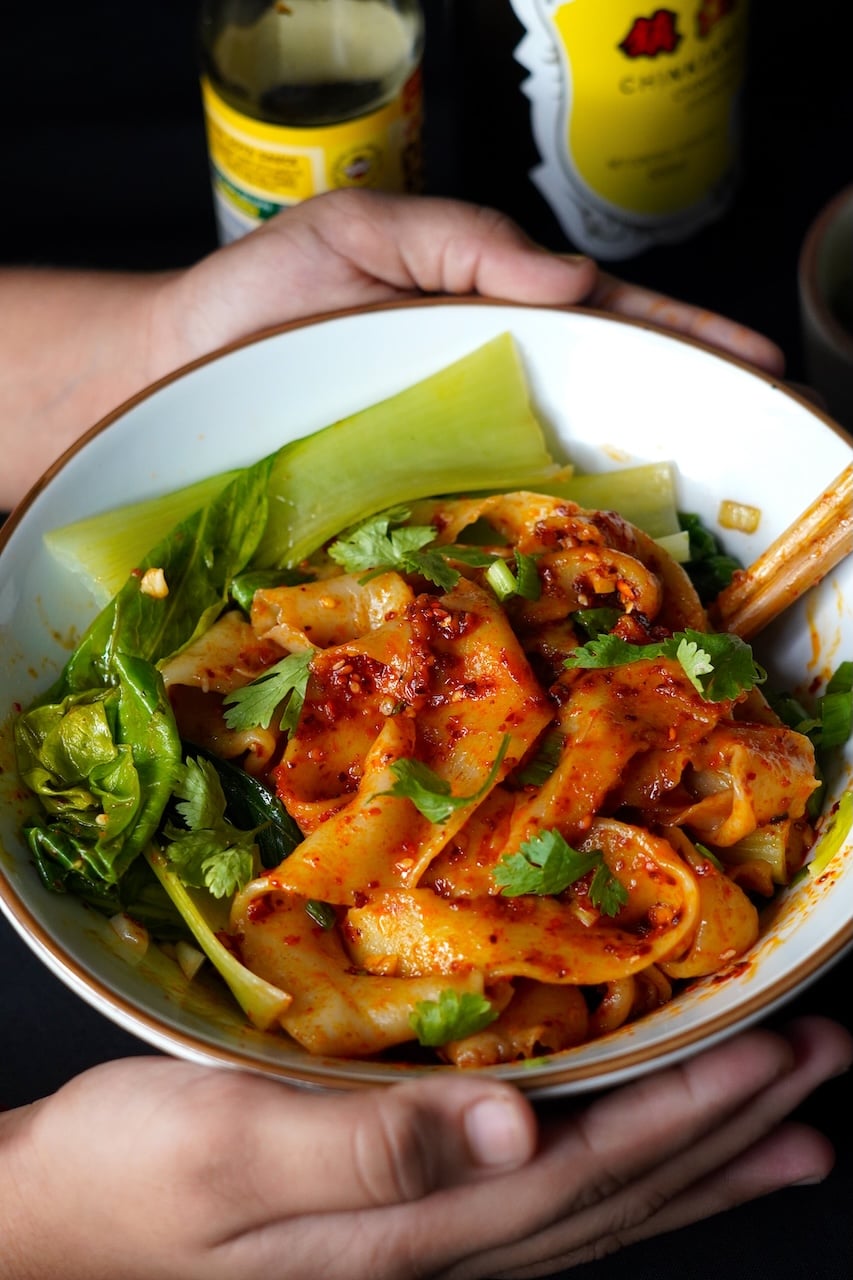
Biang Biang Noodles Recipe
The first time I had these Biang Biang noodles during our China vacation in Xi'an, right in the famous Muslim Quarter, and I absolutely loved them. The noodles were so wide, chewy and comforting. I remember it had small pieces of lamb and tomatoes.
Jump to:
We topped the thick and chewy noodles with lots of house made chilli oil. We also enjoyed it with a chilli crisp topped bread called as oil bread, chicken skewers, lamb skewers. I loved it so much that I had to come home and recreate it. This noodles is so unique, very different from yaki udon, Chinese noodles or chilli oil noodles.
About Biang Biang Noodles (Belt Noodles)
Biang Biang noodles also known as Belt noodles, Biángbiáng Miàn or 𰻝𰻝面 in Chinese. These noodles are wide, thick and chewy which resembles belt (hence the name). It is also popular because it is hand pulled and hand made. The noodles are popular in Shaanxi Province in northwestern China, especially in Xi'an.
Xian is known for their chillies and lamb. This noodle bowl is topped with seared cumin lamb and lots of chilli oil. The thick chewy noodles absorbs all the chillies beautifully creating a wholesome noodle bowl. This noodles are often considered affordable and cheap, so workers in Xian prefer this noodle bowl as a comforting meal.
The noodles dough is made with wheat flour, salt and water. The dough is allowed to rest in oil so it gets soft and pliable. The shaped dough is then banged on the counter multiple times to stretch it broad like belt. The noodles are hand pulled to create the shape. Broad noodles is easier to make than thin veg noodles and these broad noodles carry the chilli oil better.
One of the popular preparation is called as You Po Biang Biang Mian (油泼扯面) known as oil-splashed hand-pulled noodles. Noodles cooked, topped with garlic, spring onions, chilli powder and hot oil is poured over the noodles to create fragrant aromatic noodles.
Similar Recipes
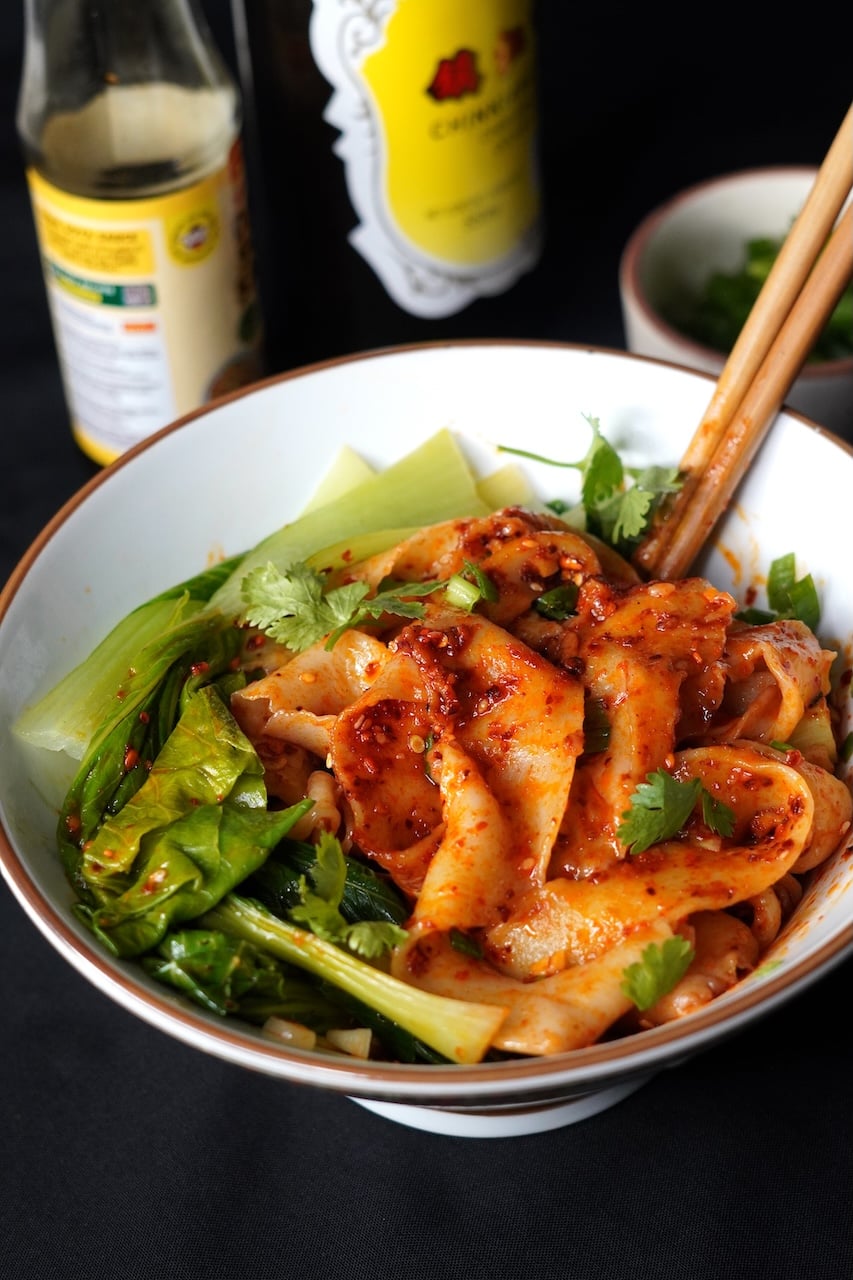
Why Biang Biang Noodles Got its Name?
I found the name "Biang Biang" so interesting when I first learned about these noodles. It is believed to come from the sound the dough makes when it is stretched and slapped against the counter while making the noodles. The word "biang" even has one of the most complicated Chinese characters, which makes this noodle even more fascinating to me!
The character biang - 𰻝 is extremely complicated. It is described as having 58 strokes, making it one of the most complex characters associated with everyday Chinese food. This combines elements such as 言 (speech), 馬 (horse), 月 (moon), 心 (heart), 刀 (knife) and others.
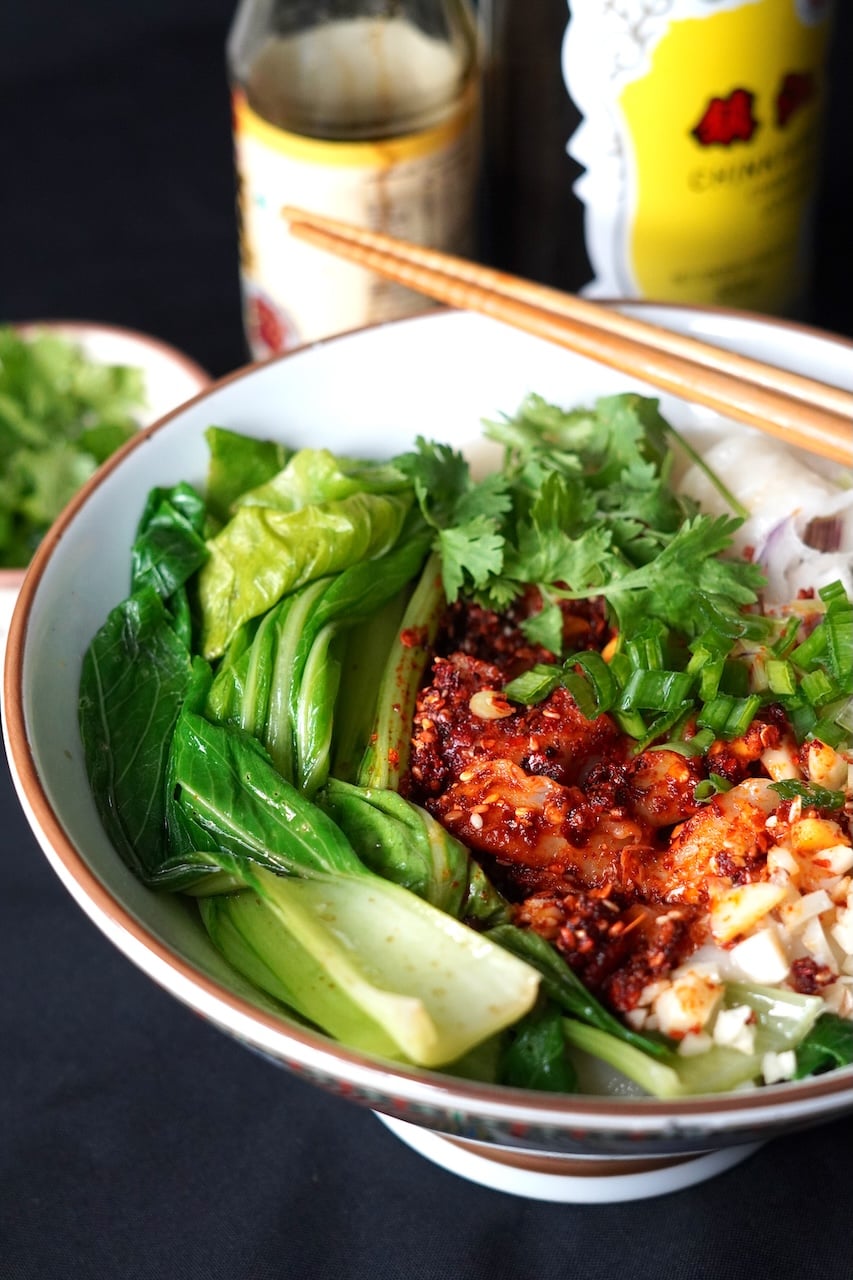
Easy to make at home
It is easy to make these hand pulled noodles at home. You make the dough with plain flour, salt and water. Make sure you knead the dough stiff and soft. This creates bouncy and chewy noodles. Once dough is made, you pre-shape and soak them in oil for few hours. This dough is eggless very different from my pasta dough.
Once soaked the noodles dough gets more pliable. One important step I do before slapping the dough is to place a chopstick on the dough which creates an intent, you use the intent to separate the noodles. You take the dough and slap on the counter to stretch it. It is pretty easy to stretch.
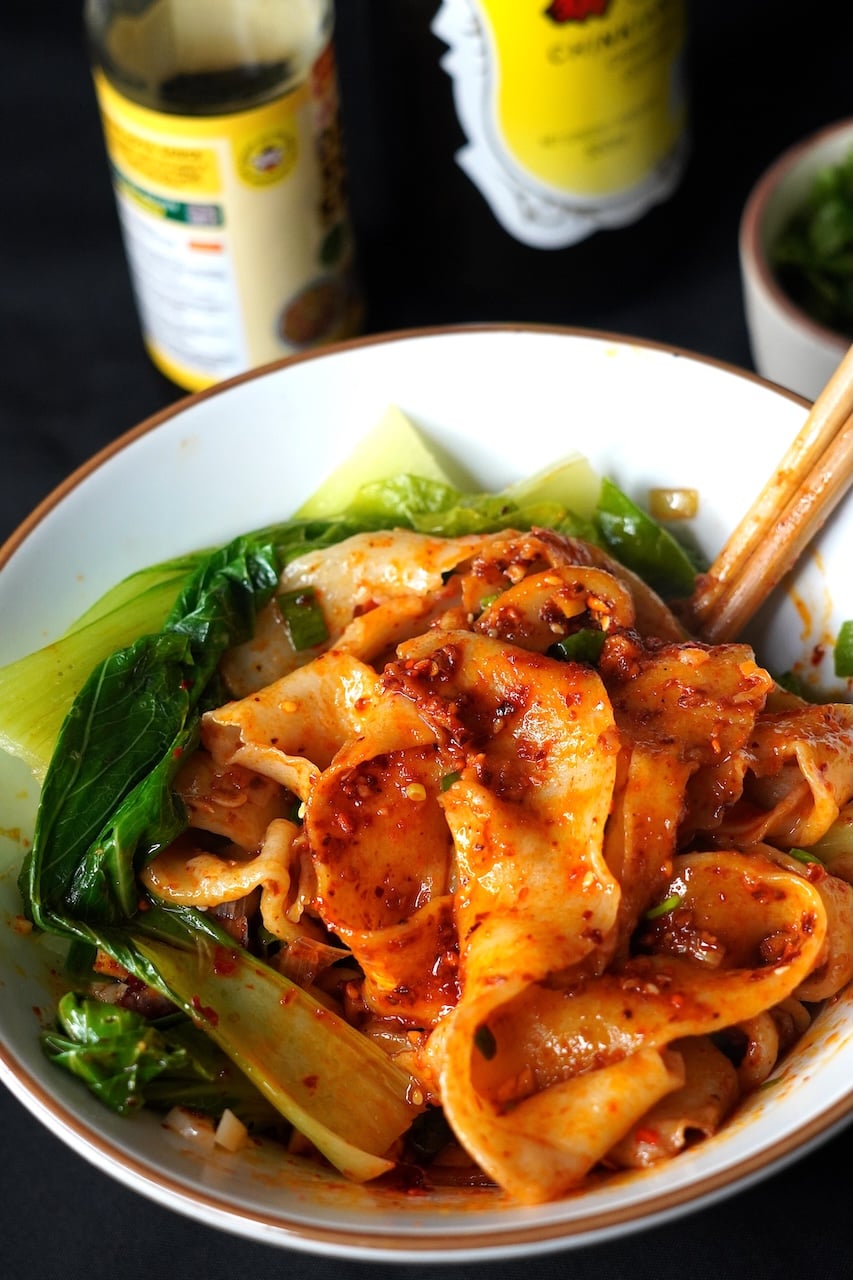
These noodles are so fresh it takes less than a minute to cook. Once cooked , we add all the toppings. Final step is to pour smoking hot oil over the chillies to bloom it. Finally mix and serve hot. You can drizzle chilli oil as well. These noodles are so thick so it is very filling and tasty.
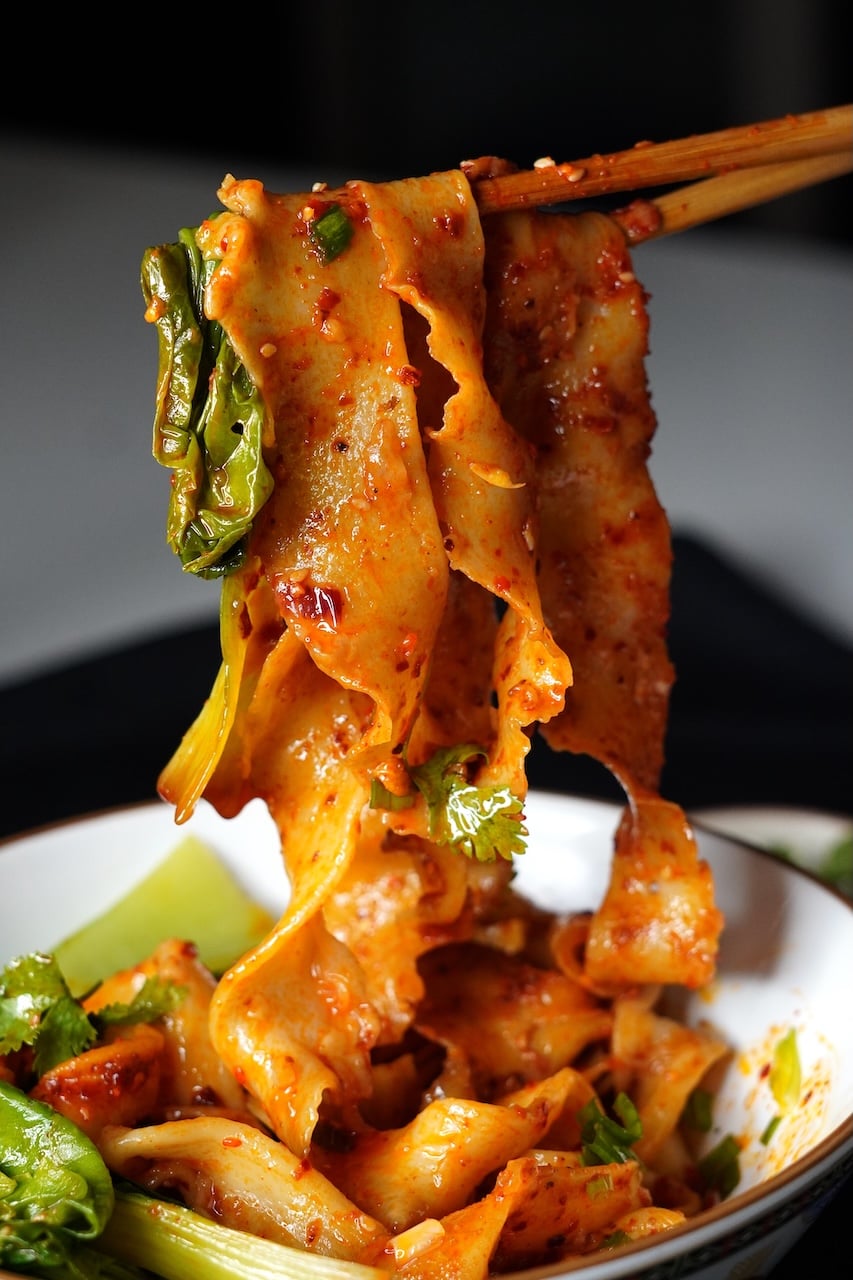
Ingredients
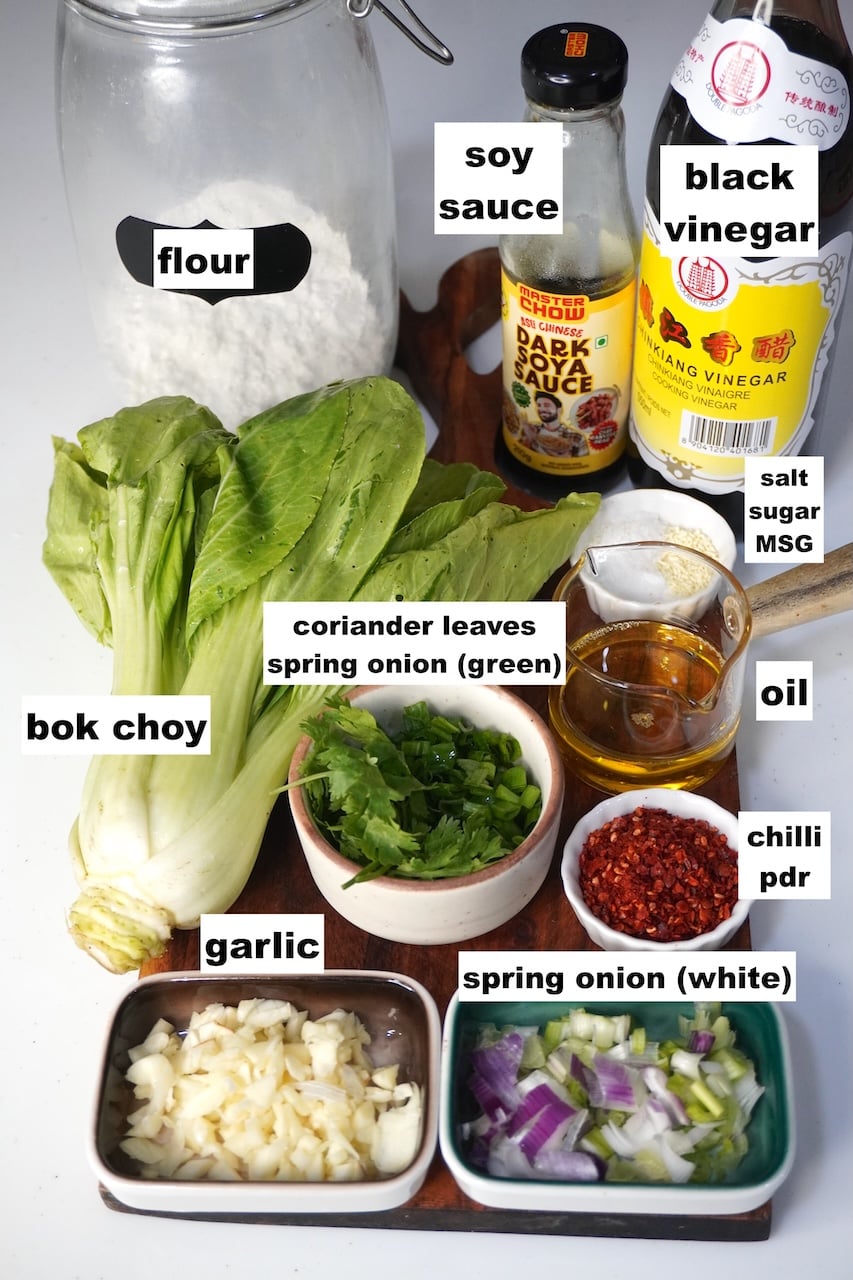
- For wheat noodles - for making the noodles I used wheat flour or plain flour, salt and water. The dough is made into a stiff dough by kneading it together.
- Sauces - For sauces, you need only soy sauce. I prefer dark soy sauce but you can use light soy sauce as well.
- Vinegar - traditionally Chinese black vinegar which is also known as chinkiang vinegar is used for the sauce. You can regular vinegar as well.
- Seasonings - for seasonings you need salt, sugar and msg. I prefer to use chicken bouillon powder instead of MSG.
- Garlic - lots of finely chopped raw garlic is added over the noodles for flavour.
- Spring onions - you need white and green part of the spring onions. White part is added over the noodles. Green is used as garnish.
- Chilli powder - I used Xian style chilli powder for this noodle dish. It has already added sesame seeds, cumin, Sichuan peppercorns.
- Vegetables - Chinese cabbage, bokchoy, Chinese greens can be added with the noodles when it is cooking.
- Oil - peanut oil is used because of its high smoking point.
Step by Step Pictures
Noodle Dough
1)Start by making the noodles. Take plain flour, salt in a bowl and mix well.
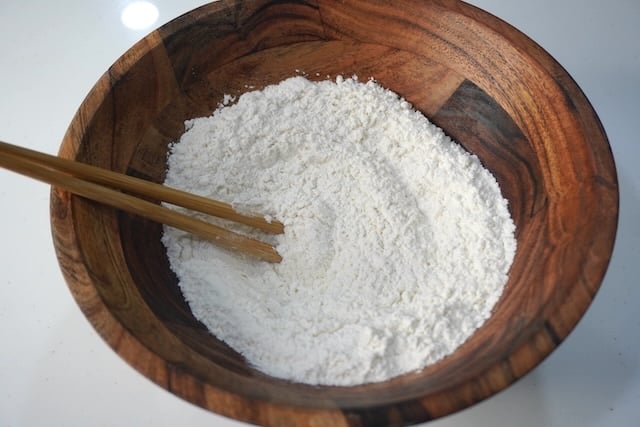
2)Slowly add in the water and use a pair of chopsticks to mix the flour into the water until the water hydrates.
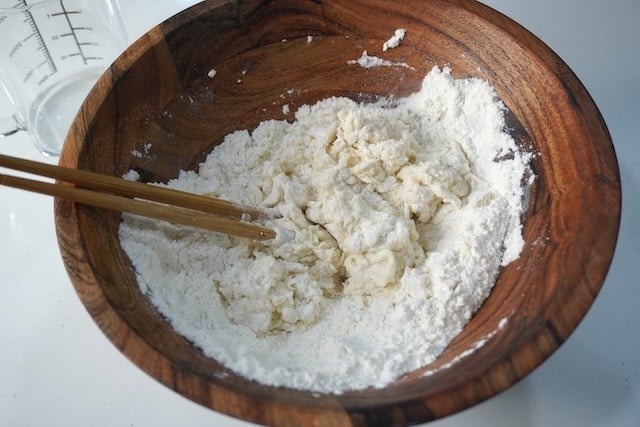
3)Now use your hands to bring the dough together. If needed you can add more water as required.
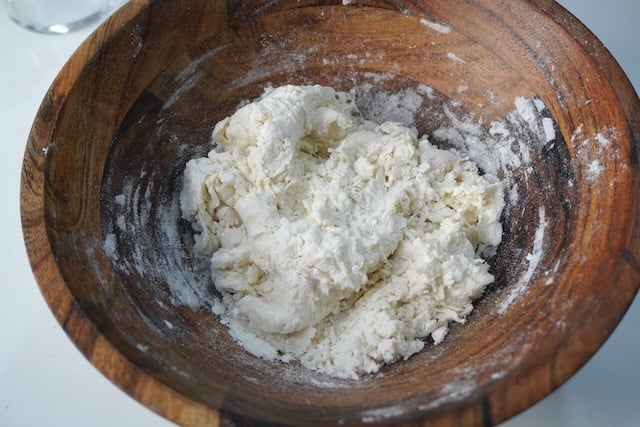
4)Knead the dough for 2 to 3 minutes until it is combined into a dough. It will be slightly grainy and cracked at this point. Cover the bowl with a lid and let it rest for 10 to 15 minutes for the gluten to relax in the dough.
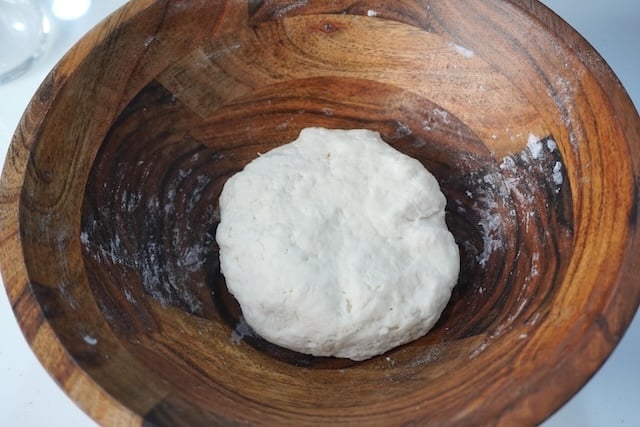
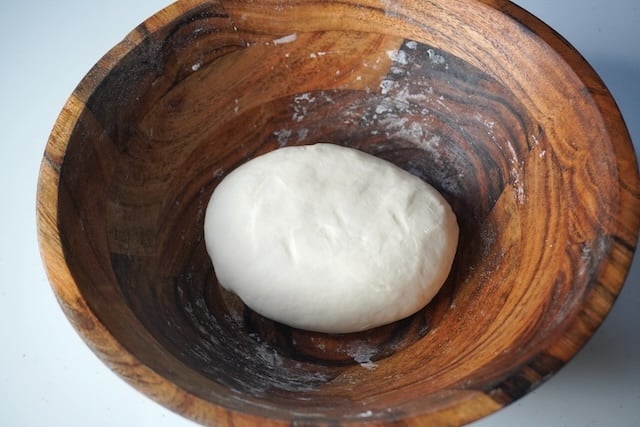
5)After 10 minutes, open the lid and knead the dough once again for 3 to 4 minutes. Now the dough will be soft, supple and smooth. Set this aside for 10 minutes.
Marinating Dough
6)Now take the dough from bowl and divide it into 6 equal portions.
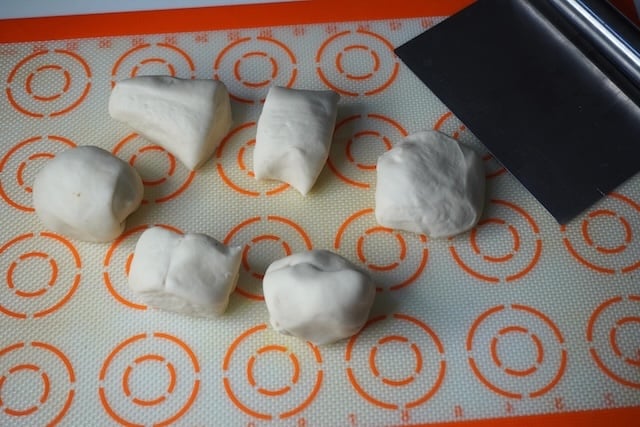
7)Now take each portion of dough and roll it into a smooth ball. Now roll it into elongated shape. Flatten it gently and place it on the work surface. Do this for all the 6 portion of dough.
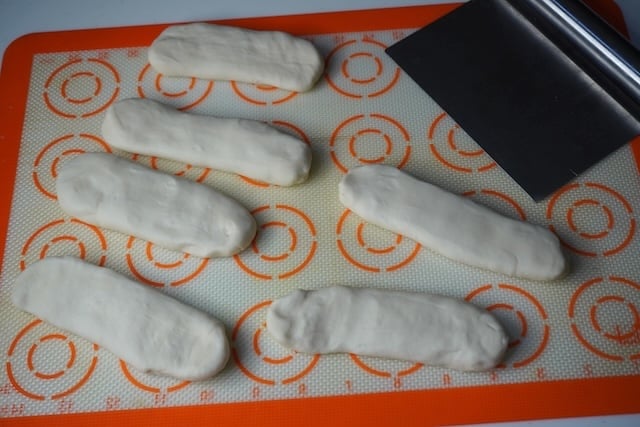
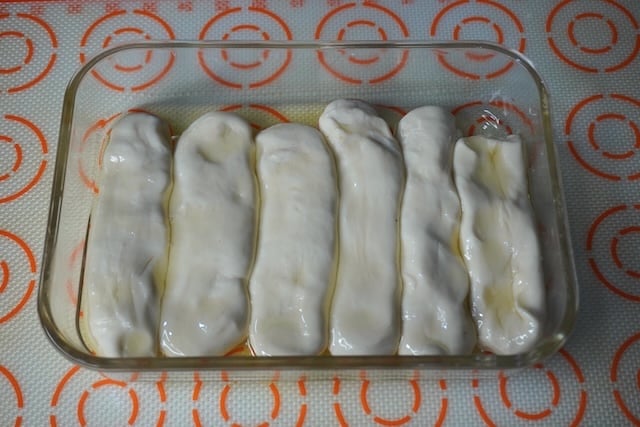
8)Now take a rectangle container with lid. Add in 3 tablespoon of the peanut oil into the container. Now place all the 6 shaped dough into the container. Coat it on both sides with oil. Cover the container with lid and leave it to rest for 2 to 3 hours. You can leave it to rest in fridge overnight as well.
Shaping Biang Biang Noodles
9)Let's make biang biang noodles. Take a large pot of water and place it on high heat. Let it come to a full boil. Take a portion of the dough. Place it on a work surface.
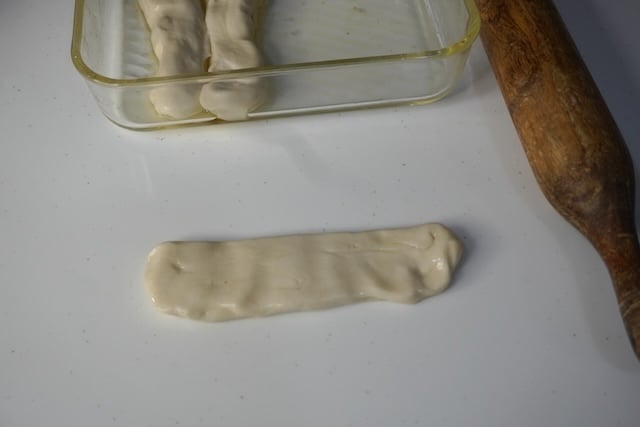
10)Gently roll it using a rolling pin so it is slightly elongated. Place a wooden chopstick on top of the rolled dough and press gently. This creates an indent on the dough.
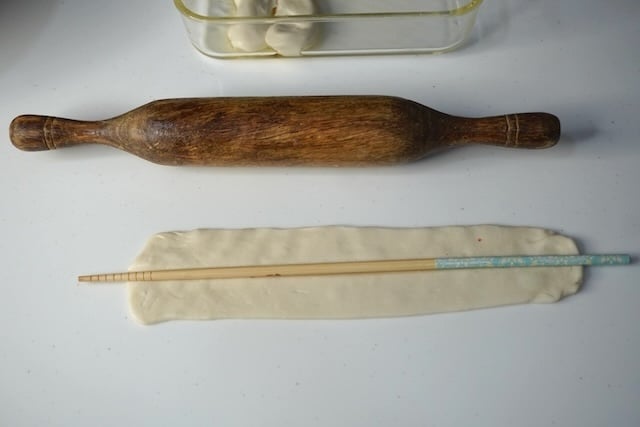
11)This intent will be used to tear (separate) the noodles once it is stretched.
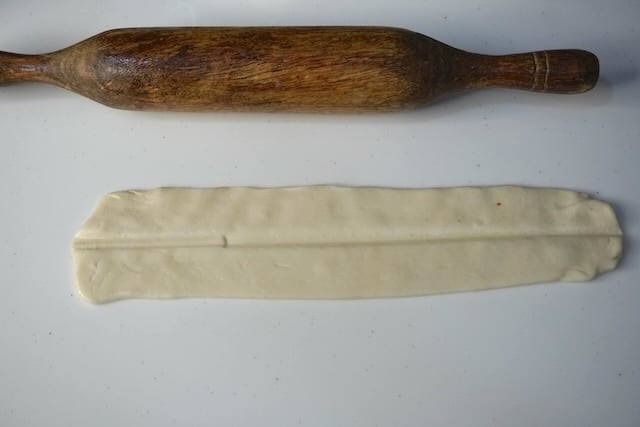
12)Now use both of your hands to hold both the ends of the dough. Gently slap on the counter and elongate it.
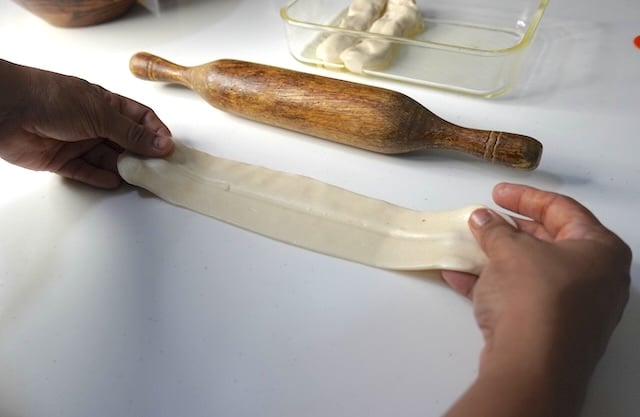
13)It will stretch easily. Be gently with this process.
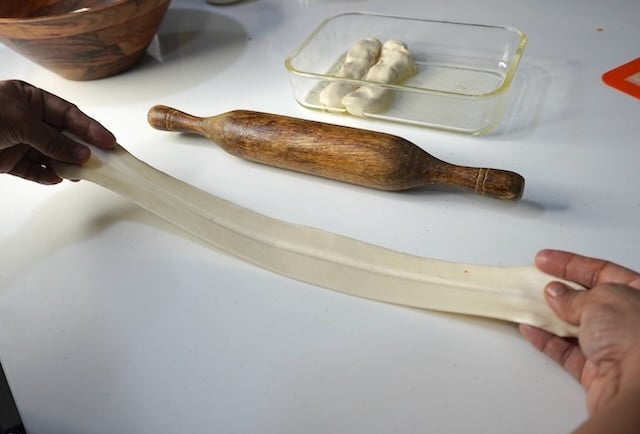
14)Keep slapping on the counter and stretch the dough to the desired thickness.
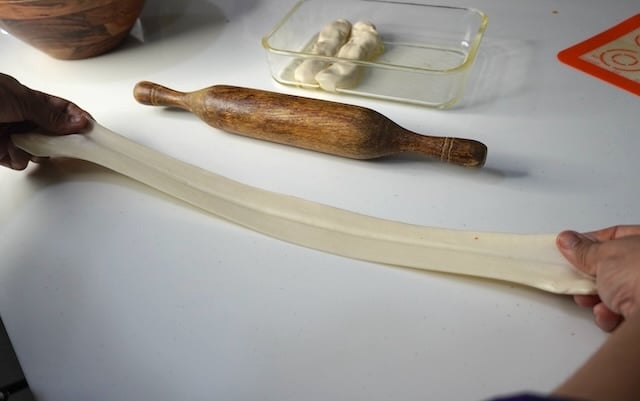
15)Now use your hands to tear the dough in the middle through the indent which we made.
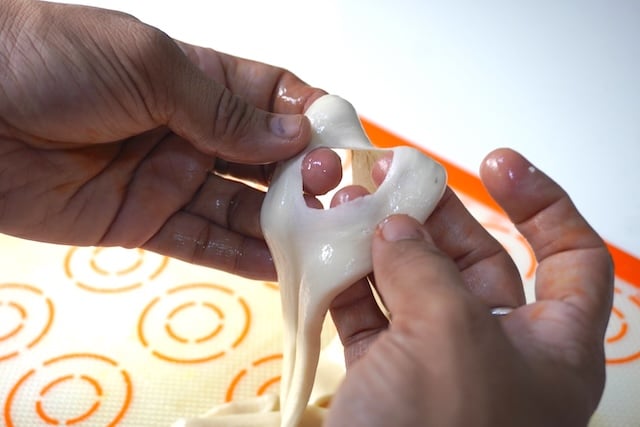
16)Keep separating the noodles gently, it will tear easily.
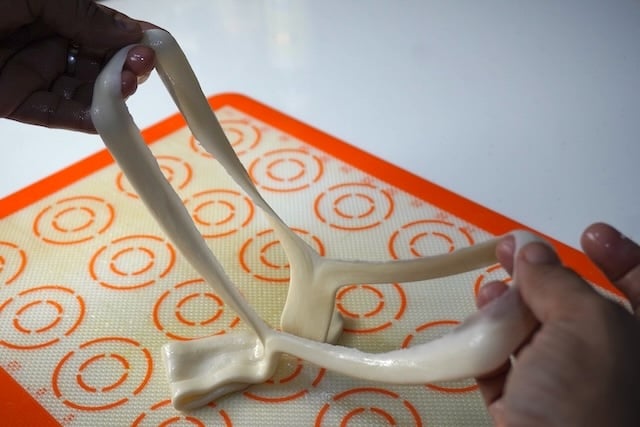
17)Look how long the noodles look.
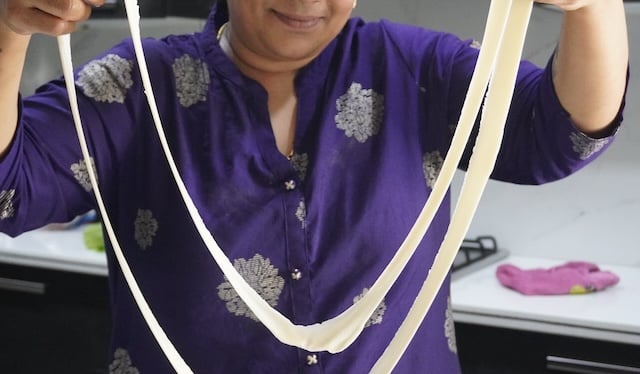
Cooking Noodles
18)Now add the noodles to boiling water. Add the roughly torn bok choy into hot water.
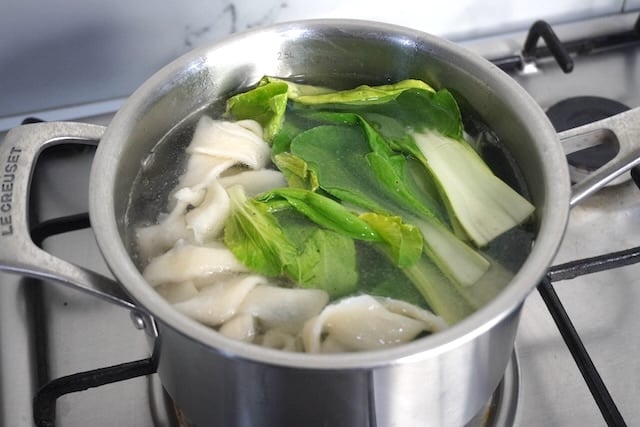
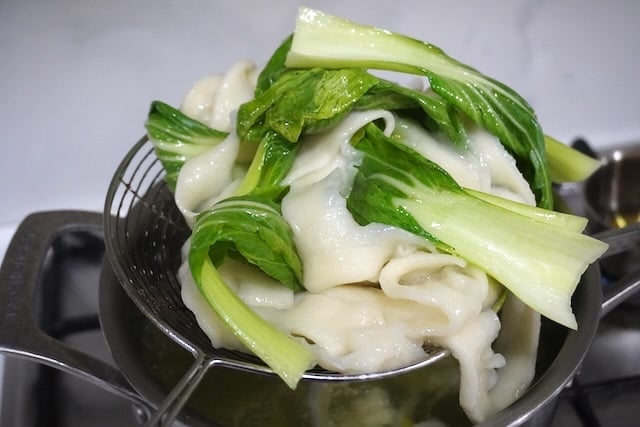
19)Cook the noodles and bokchoy for just 45 seconds to 1 minute. Strain the noodles using a slotted spoon.
Assembling noodles
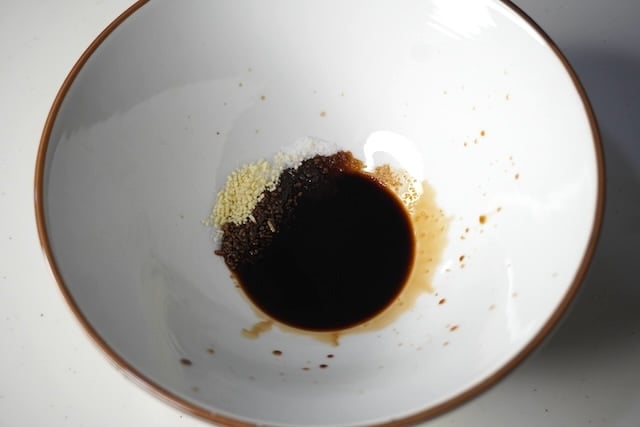
20)This recipe makes 6 servings. Lets assemble one bowl now. Take a noodle bowl, add 1 tablespoon of soy sauce, 1 tablespoon of black vinegar, ½ teaspoon msg, ½ teaspoon salt, 1 teaspoon sugar in the bowl. Mix well so the sugar is melted into the soy sauce.
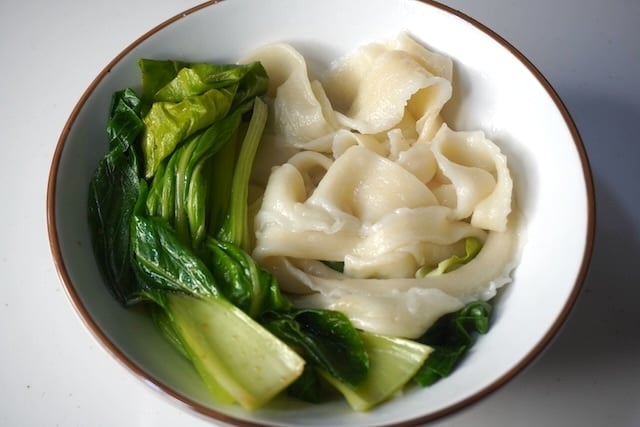
21)Now to the bowl, add in the cooked noodles and bokchoy.
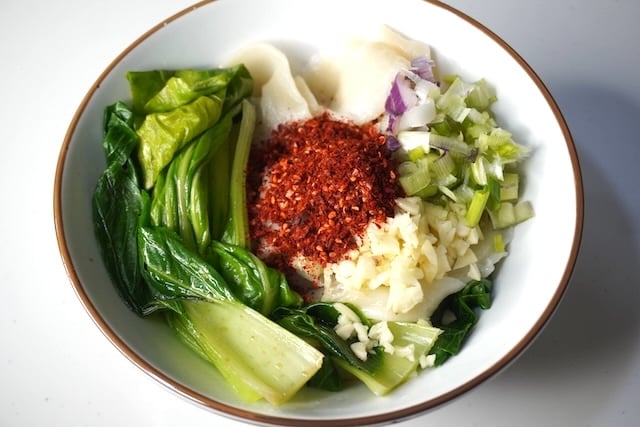
22)Now add in 1 tablespoon of garlic, 1 chopped spring onion white part, 1 tablespoon of Chinese chilli powder on top of the noodles.
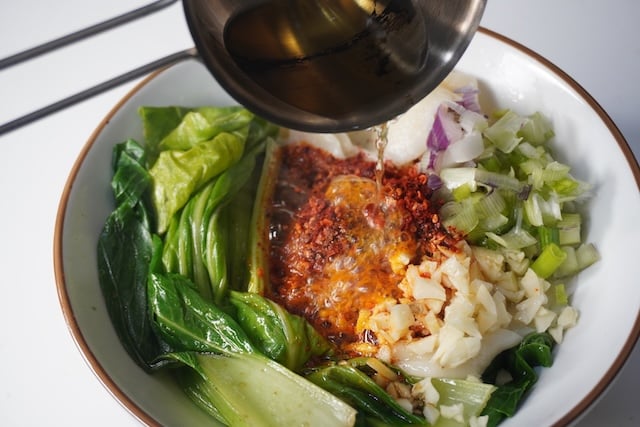
23)Heat 2 tablespoon of peanut oil till smoking hot. Pour this hot oil slowly over the garlic, spring onions and chilli powder. This will bloom the chilli powder.
24)Garnish with spring onion greens and coriander leaves.
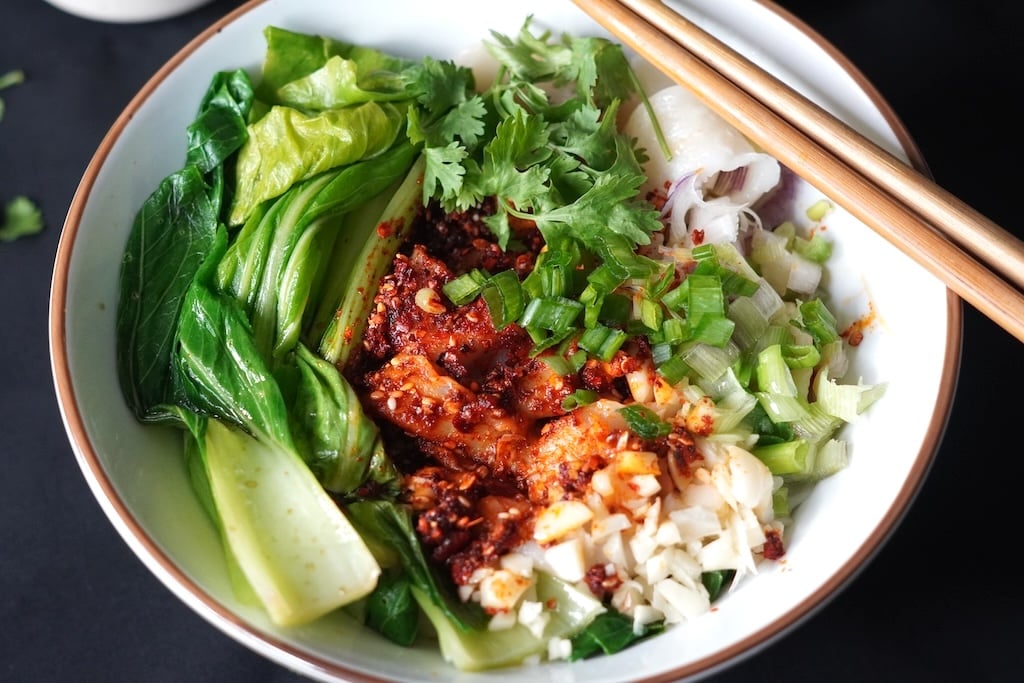
25)Mix the noodles well using chopstick and enjoy.
Expert Tips
Dough - Don't make the dough too soft. It has to be stiff so it is chewy and bouncy. Once dough is shaped, marinate it in oil for few hours which makes the dough stretchy and pliable.
Shaping Noodles - Once noodles is marinated, take a portion and use your hands to slap on the counter to stretch the dough. Make sure to shape the noodles as thin as possible. The thinner the noodles the more tasty it gets.
Cooking method - these fresh hand pulled noodles takes just 45 seconds to 1 hour to cook. Don't over cook the noodles.
Toppings - you can be creative with the topping. You can add cumin seared lamb, any vegetables of choice, tomatoes in the noodles. Enjoy these noodles with lots of Chilli oil.
Serving and Storage - Enjoy biang biang noodles hot for best taste. Biang biang noodles taste best when served fresh and hot. You can make the dough and store in fridge upto a day.
FAQ
Q: Can I make this noodles with whole wheat flour?
All purpose flour or plain flour is used to make this noodles, since it has more gluten content it stretches better. Whole wheat flour may tear when you stretch.
Q: What are the other toppings I can add in biang biang noodles?
Traditionally a combination of meat, vegetables, aromatics and chilli oil is used. You can use lamb, beef, tomatoes, Chinese greens, cucumber, roasted peanuts, can be used as toppings.
📖 Get Recipe
Biang Biang Noodles Recipe (Hand pulled Noodles Recipe)
Equipment
Ingredients
For Noodles
- 2 cups Plain Flour
- ¾ teaspoon Salt
- ½ cup Water
- 3 tablespoon Peanut Oil
For Sauce and Toppings
- 6 medium Bok Choy cleaned
- 6 tablespoon Dark Soy sauce
- 6 tablespoon Black Vinegar
- 6 teaspoon Sugar
- 3 teaspoon Chicken Boullion powder or MSG
- 3 teaspoon Salt or to taste
- 6 tablespoon Garlic peeled and finely chopped
- 6 no Spring onion whites chopped finely
- 6 tablespoon Chinese Chilli Powder or to taste
- 12 tablespoon Peanut Oil you need 2 tablespoon oil for one bowl
For Garnishing
- 6 tablespoon Spring Onions greens chopped finely
- 6 tablespoon Coriander leaves chopped
Instructions
- Start by making the noodles. Take plain flour, salt in a bowl and mix well. Slowly add in the water and use a pair of chopsticks to mix the flour into the water until the water hydrates.
- Now use your hands to bring the dough together. If needed you can add more water as required. Knead the dough for 2 to 3 minutes until it is combined into a dough. It will be slightly grainy and cracked at this point. Cover the bowl with a lid and let it rest for 10 to 15 minutes for the gluten to relax in the dough.
- After 10 minutes, open the lid and knead the dough once again for 3 to 4 minutes. Now the dough will be soft, supple and smooth. Set this aside for 10 minutes.
- Now take the dough from bowl and divide it into 6 equal portions. Now take each portion of dough and roll it into a smooth ball. Now roll it into elongated shape. Flatten it gently and place it on the work surface. Do this for all the 6 portion of dough.
- Now take a rectangle container with lid. Add in 3 tablespoon of the peanut oil into the container. Now place all the 6 shaped dough into the container. Coat it on both sides with oil. Cover the container with lid and leave it to rest for 2 to 3 hours. You can leave it to rest in fridge overnight as well.
- Let's make biang biang noodles. Take a large pot of water and place it on high heat. Let it come to a full boil.
- Take a portion of the dough. Place it on a work surface. Gently roll it using a rolling pin so it is slightly elongated. Place a wooden chopstick on top of the rolled dough and press gently. This creates an indent on the dough. This intent will be used to tear (separate) the noodles once it is stretched.
- Now use both of your hands to hold both the ends of the dough. Gently slap on the counter and elongate it. It will stretch easily. Be gently with this process. Keep slapping on the counter and stretch the dough to the desired thickness. Now use your hands to tear the dough in the middle through the indent which we made.
- Now add the noodles to boiling water. Add the roughly torn bok choy into hot water. Cook the noodles and bokchoy for just 45 seconds to 1 minute. Strain the noodles using a slotted spoon.
- Meanwhile, take a noodle bowl, add 1 tablespoon of soy sauce, 1 tablespoon of black vinegar, ½ teaspoon msg, ½ teaspoon salt, 1 teaspoon sugar in the bowl. Mix well so the sugar is melted into the soy sauce. Now to the bowl, add in the cooked noodles and bokchoy.
- Now add in 1 tablespoon of garlic, 1 chopped spring onion white part, 1 tablespoon of Chinese chilli powder on top of the noodles. Heat 2 tablespoon of peanut oil till smoking hot. Pour this hot oil slowly over the garlic, spring onions and chilli powder. This will bloom the chilli powder.
- Garnish with spring onion greens and coriander leaves. Mix the noodles well using chopstick and enjoy.
Nutrition
Tried this Recipe
Mention @yummytummyaarthi or tag #yummytummyaarthi!If you have any questions not covered in this post and if you need help, leave me a comment or mail me @aarthi198689@gmail.com and I'll help as soon as I can.
Follow me on Instagram, Facebook,Pinterest ,Youtube and Twitter for more Yummy Tummy inspiration.
IF YOU MAKE THIS RECIPE OR ANYTHING FROM YUMMY TUMMY, MAKE SURE TO POST IT AND TAG ME SO I CAN SEE ALL OF YOUR CREATIONS!! #YUMMYTUMMYAARTHI AND @YUMMYTUMMYAARTHI ON INSTAGRAM!

Leave a Reply